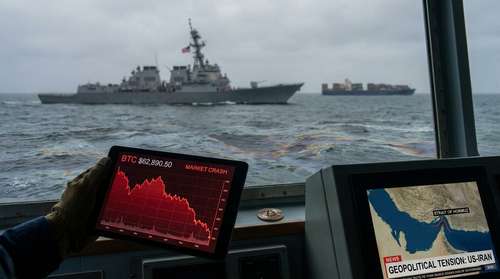

A sudden Bitcoin price drop erased over $240 million in long positions today, sending shockwaves through global financial markets. The violent $2,000 plunge followed Vice President JD Vance's confirmation that high-stakes diplomatic negotiations between the United States and Iran in Islamabad, Pakistan, have collapsed without securing a permanent ceasefire. As geopolitical tensions boil over, the entire digital asset space is bracing for extended turbulence.
Geopolitical Tensions Fuel Cryptocurrency Market Volatility
The US-Iran peace talks failure immediately triggered massive cryptocurrency market volatility across centralized and decentralized exchanges. Billed as the first direct, face-to-face meeting between US and Iranian officials since the 1979 Islamic Revolution, the summit carried immense historical weight. However, after 21 hours of intense discussions at the Serena Hotel in Islamabad, Vice President Vance, accompanied by US negotiators Steve Witkoff and Jared Kushner, walked away from the table. The US delegation was unable to secure a fundamental commitment from Tehran to abandon its nuclear weapons development or guarantee free passage through the heavily contested Strait of Hormuz.
Vance delivered a blunt assessment to reporters before departing. "Iran has chosen not to accept our terms," he stated firmly. "That is bad news for Iran much more than it is for the United States". The administration confirmed that its final and best offer had been left on the table, officially halting the diplomatic progress that had previously established a temporary two-week ceasefire.
The Demands Behind the Diplomatic Stalemate
The breakdown centered on uncompromising terms from both sides. While the US demanded strict nuclear concessions and shipping lane security, Iran arrived with its own set of rigid conditions. Tehran requested full sovereignty over the Strait of Hormuz—a crucial maritime artery that handles roughly 20% of global oil trade—alongside complete war reparations, the unconditional release of frozen assets, and a regional ceasefire extending to Lebanon. With neither side willing to budge following the military escalation of "Operation Epic Fury" in late February, the deadlock was inevitable.
Massive Bitcoin Liquidation Today Erases $240 Million
Financial markets reacted ruthlessly to the diplomatic collapse. Bitcoin, which had been holding steady above $73,000 amid investor optimism for a treaty, cascaded down toward $71,300 in a matter of minutes. This sharp rejection forced a massive Bitcoin liquidation today, wiping out over $240 million from traders who had heavily leveraged their long positions in anticipation of a bullish breakthrough.
The rapid unwinding of these leveraged positions created a localized flash crash. Forced selling by exchanges triggered further stop-loss orders, exacerbating the downward pressure. The bleeding quickly spread across the broader digital asset sector. Major altcoins tracked the flagship cryptocurrency's descent, with Ethereum (ETH) tumbling to $2,211 and Solana (SOL) slipping by more than 2%. XRP also dropped heavily to $1.32. Within hours, the total crypto market capitalization shrank by 1.54%, falling to roughly $2.43 trillion as institutional and retail investors alike rushed to reduce their risk exposure. Institutional demand, which had previously propped up the market, showed signs of exhaustion, with spot Bitcoin ETF inflows stalling noticeably during the massive sell-off.
The Geopolitical Impact on Crypto: What Happens Next?
This weekend's events serve as a primary textbook example of the geopolitical impact on crypto. When international conflicts threaten global energy supplies, the macroeconomic ripple effects are immediate. A prolonged closure of the Strait of Hormuz would likely push crude oil prices significantly higher, driving up inflation expectations and forcing central banks to maintain tighter monetary policies. These headwinds typically suppress risk-on assets, including equities and digital currencies.
However, the market remains heavily divided on Bitcoin's exact role during international military crises. While initial reactions to the breaking crypto news leaned heavily bearish, some contrarian investors continue to view the digital asset as a non-sovereign safe haven. Market analysts note that Bitcoin has managed to establish strong localized support near the $70,800 level, absorbing the shock despite the ongoing tariff disputes and Middle Eastern conflicts that have utterly dominated crypto news April 2026.
Critical Levels for Traders to Watch
With the Crypto Fear and Greed Index sitting firmly in neutral territory at 45, market participants are holding their breath for the next major catalyst. Prior to the Islamabad talks, prominent crypto analysts framed the weekend as a pure coin-flip trade. Technical analysts suggest that a sustained drop below current support could send Bitcoin testing the $65,000 threshold as panic sets in. Conversely, if the temporary Pakistan-brokered ceasefire manages to hold despite the formal diplomatic collapse, prices could stabilize and attempt another run at $80,000.
For now, traders are keeping a close watch on military developments over the next 72 hours. The immediate financial fallout highlights just how sensitive digital assets remain to macroeconomic shocks. You can expect heightened volatility to persist until the market gains absolute clarity on whether the current military standoff will escalate further or settle into a tense, prolonged freeze.