
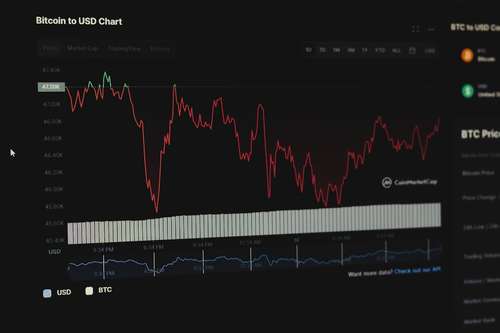
The defining Bitcoin price drop 2026 has abruptly disrupted the digital asset landscape this Sunday, with the premier cryptocurrency tumbling to $69,192. The sharp decline on March 22, 2026, was triggered by rapidly escalating global tensions after President Donald Trump issued a strict 48-hour ultimatum to Iran. His demand to reopen the shipping lanes or face devastating military strikes on power plants forced investors to abruptly adopt a risk-off mentality. The immediate shift in sentiment sent shockwaves across global risk assets, making this Bitcoin price drop 2026 a pivotal moment for traders trying to navigate the new macro landscape.
The Trump Iran Strait of Hormuz Standoff Shakes Markets
The intense Trump Iran Strait of Hormuz confrontation serves as the primary catalyst for today's market anxiety. President Trump's firm military deadline injects severe uncertainty into the Middle East, a region critical for global energy infrastructure and macroeconomic stability. As the Trump Iran Strait of Hormuz conflict escalates, it threatens the world's most vital transit chokepoint, which facilitates the daily transport of roughly 20% of the global crude supply.
Any prolonged closure threatens to unleash a severe supply chain crisis. For digital asset investors, the geopolitical impact on Bitcoin is immediate and tangible. While purists view digital assets as an absolute hedge against traditional financial instability, the imminent threat of military escalation frequently triggers sudden flight-to-cash behaviors. Assessing the geopolitical impact on Bitcoin requires understanding that institutional funds often liquidate risk assets first when global stability fractures.
Crypto Market Liquidations Today Hit Nearly $300 Million
The abrupt shift in market sentiment caught highly leveraged traders completely off guard. Crypto market liquidations today ballooned to roughly $299 million, forcing automated sell-offs across major global exchanges. According to CoinGlass data, over 84,239 traders were wiped out in just hours. Analyzing the crypto market liquidations today reveals that approximately $254 million of the total wipeout came exclusively from long positions.
Altcoins Bleed Alongside the Benchmark Asset
Those betting on uninterrupted price discovery found themselves trapped in a cascade of margin calls. The morning bloodbath included a massive $10 million BTC-USDT swap liquidation on OKX, marking the largest single casualty of the event. Bitcoin long liquidations alone accounted for over $122 million. Ethereum traders lost nearly $96 million as ETH slipped 1.8% to $2,114, while XRP dropped 2.5% to $1.41. This devastating cascade highlights the extreme BTC price volatility March 2026 has delivered. Experiencing such intense BTC price volatility March 2026 reminds you how quickly over-leveraged markets can unravel when military events dictate the tape.
The Threat of an Oil Shock Inflation Crypto Market Crisis
To understand why a regional Middle East conflict tanks a decentralized digital currency, you must look at macroeconomic mechanics. An extended maritime blockade risks sending crude oil prices soaring to $120 or even $130 per barrel. This specific chain of events creates an oil shock inflation crypto market scenario that systematically drains capital from speculative sectors. The looming oil shock inflation crypto market threat is the primary reason large-scale investors are hitting the sell button.
When energy prices spike, headline inflation inevitably follows. Federal Reserve rate cuts, which many traders had aggressively priced into their spring models, are suddenly off the table. Current derivatives pricing shows traders now see a 99.1% probability that the Fed will keep interest rates elevated at their upcoming meeting. Higher borrowing costs strengthen the U.S. dollar and restrict global liquidity. Because liquidity is the lifeblood of cryptocurrency valuations, an oil crisis directly suppresses the buying power needed to sustain an all-time high trajectory.
Reevaluating Bitcoin as a Safe Haven 2026
With global military tensions peaking, the narrative surrounding Bitcoin as a safe haven 2026 faces a crucial, defining stress test. It is worth remembering that following the initial strikes in late February, debates regarding Bitcoin as a safe haven 2026 were largely positive. BTC actually outperformed major indexes like the S&P 500, climbing over 7% while equities stumbled, and U.S. spot ETFs pulled in nearly $1 billion in net inflows early in the month.
However, today's brutal market reaction proves that liquidity constraints still supersede the digital gold narrative in the immediate, chaotic aftermath of a military threat. When margin calls hit traditional portfolios, institutional players sell their most liquid assets to cover obligations across the board. As the 48-hour Trump ultimatum approaches its expiration, traders remain glued to military developments. Whether Bitcoin reclaims its momentum above $70,000 or slides further toward the mid-$60K support block depends entirely on whether diplomacy can avert a devastating strike on energy infrastructure.