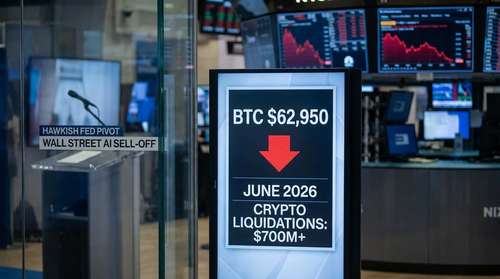

The crypto market has entered a decisive phase this week as Bitcoin tests the critical $60,000 support level, triggering a massive spike in investor panic. Google Trends data reveals that searches for "crypto capitulation" have exploded, skyrocketing from a score of 11 to 58 between February 1 and February 8, 2026. This surge in anxiety is mirrored by the Crypto Fear & Greed Index, which plummeted to a multi-year low of 7 (Extreme Fear), a reading not seen since the depths of the 2022 bear market. Yet, beneath the surface of this retail panic, on-chain data uncovers a divergent trend: institutional whales are aggressively accumulating Bitcoin, suggesting a potential market bottom is forming while retail investors sell at a loss.
Retail Panic vs. Institutional Strategy
The current market landscape presents a classic divergence between retail sentiment and institutional action. As Bitcoin briefly flash-crashed to $60,000 on February 5, panic selling wiped out over $2.67 billion in leveraged positions in a single 24-hour window, with long positions accounting for nearly 90% of the damage. This "flush out" of over-leveraged traders is often a prerequisite for a sustainable market reversal.
While retail traders are rushing for the exits, smart money appears to be stepping in. Data from Glassnode indicates that the Accumulation Trend Score has climbed to 0.68, signaling that larger entities are absorbing the sell-side pressure. Specifically, wallets holding between 10 and 100 BTC have been net buyers during this dip, treating the $60,000 zone as a high-value accumulation area rather than a reason to fold.
Whale Movements: A Tug-of-War at $60k
Despite the broader accumulation trend, the market remains volatile due to conflicting signals from "mega-whales." On February 5, a significant whale entity transferred approximately 5,000 BTC (valued at roughly $351 million) to Binance. Such large inflows to exchanges typically signal potential selling or hedging intent, which contributed to the sharp intraday volatility.
However, this sell-side pressure is being met with fierce resistance. Analyst reports suggest that while some legacy holders are deleveraging, new institutional buyers are stepping in to defend the $60,000 line. This creates a high-stakes tug-of-war. If the $60,000 support holds, historical data suggests this capitulation event could mark the definitive bottom of the early 2026 correction. Conversely, a sustained break below this level could open the door to a deeper slide toward $45,000 or $50,000.
The Significance of the Fear & Greed Index
Trading against the crowd is a time-honored strategy in crypto, and the current sentiment readings are screaming "opportunity" to contrarian investors. The Fear & Greed Index hitting 7 is a statistically rare event. Historically, purchasing Bitcoin when the index is below 10 has generated outsized returns over the following 6-12 months. This extreme negativity typically occurs when the last of the weak hands have capitulated, leaving the market in the hands of long-term holders with higher conviction.
Institutional Flows and Market Outlook
Looking ahead, the key variable remains institutional demand via Spot ETFs and direct acquisitions. While recent days have seen mixed flow data, with some outflows from major products like IBIT and GBTC, the broader structural thesis for Bitcoin remains intact. The "crypto market bottom analysis" suggests that we are in the final stages of a corrective wave that began in late 2025.
For investors, the current setup requires patience and a cool head. The explosion in "capitulation" searches is a powerful contrarian signal, indicating that the worst of the emotional selling may be over. As whales continue to move BTC to cold storage and the leverage in the system resets, the stage is being set for Bitcoin's next major move. Whether that move is an immediate V-shaped recovery or a prolonged consolidation at these levels, the data suggests that $60,000 is a line in the sand that the smart money is willing to defend.