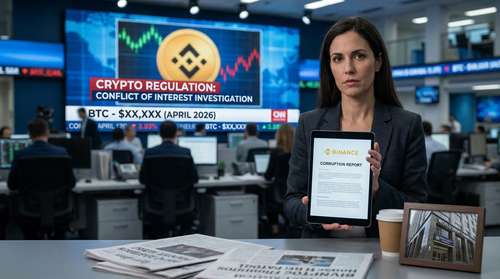
A scathing investigative dossier has cast a dark shadow over the White House’s digital asset ambitions, directly targeting the Trump World Liberty Financial ecosystem. Released on Monday, April 27, 2026, by the consumer advocacy group Public Citizen, the "Conflict Coin" report outlines startling allegations regarding the President's personal $1 billion stake in the decentralized finance platform. According to the investigation, the administration deliberately neutered federal oversight to shield its highly lucrative partnership with Binance. These bombshell claims of crypto regulation conflicts of interest land at a particularly turbulent moment for global markets. Investors are reeling from the Bitcoin price drop April 2026, as the premier cryptocurrency slid below $77,000 amid stalled U.S.-Iran peace negotiations and macroeconomic anxieties.
The Billion-Dollar Conflict: Inside the Binance Corruption Report
The core of the controversy centers on the administration's dramatic pivot in digital asset policy. The Binance corruption report paints a picture of systemic favoritism, arguing that the White House systematically dismantled enforcement mechanisms to benefit the President's business ventures.
In May 2025, the government notably secured a voluntary SEC Binance lawsuit dismissal, effectively ending a rigorous clampdown on the world's largest exchange. Months later, the administration issued a presidential pardon to Binance founder Changpeng Zhao, who had previously pleaded guilty to severe anti-money laundering compliance failures. Public Citizen asserts that these actions were not merely pro-industry policy, but calculated moves to ensure the success of Trump World Liberty Financial.
Today, Binance holds an estimated 87% of World Liberty’s USD1 stablecoin—an unprecedented concentration of a supposedly decentralized asset. The report suggests that this deep financial enmeshment directly violates the ethical boundaries traditionally expected of the Oval Office, enriching the First Family while sidelining federal watchdogs.
Sanctions, Security, and the World Liberty Trust Charter
The geopolitical implications of this partnership are alarming analysts and national security experts alike. In 2023, Binance paid $4.3 billion in penalties after admitting to facilitating transactions for terrorist-designated groups and helping users evade international sanctions—most notably in Iran.
This creates a staggering contradiction. At the very moment the United States is entrenched in a high-stakes military and diplomatic standoff with Tehran, the Commander-in-Chief's flagship business venture relies on an exchange historically penalized for aiding that exact adversary. Critics argue that the original World Liberty Trust charter, which promised transparent and secure decentralized finance for everyday Americans, has been entirely compromised by these shadowy institutional alliances.
Furthermore, recent disclosures revealed that an Abu Dhabi-backed entity secretly acquired a 49% stake in World Liberty Financial shortly before the administration approved sensitive computer chip exports to the region. These compounding revelations only amplify calls for immediate congressional oversight.
Geopolitical Turmoil Drives the Bitcoin Price Drop April 2026
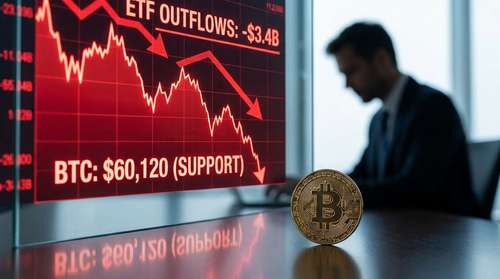
While the political fallout intensifies in Washington, digital asset traders are navigating their own crisis. The US-Iran war crypto news cycle has severely punished risk assets this week. Bitcoin definitively lost its footing above the $79,000 resistance level, tumbling past immediate support lines to trade under $77,000.
This sharp Bitcoin price drop April 2026 was triggered over the weekend when President Trump abruptly canceled a planned diplomatic mission to Pakistan. Special envoys Steve Witkoff—who also co-founded World Liberty Financial—and Jared Kushner were scheduled to hold indirect peace negotiations with Iranian officials. After Tehran introduced new demands regarding the Strait of Hormuz blockade, the U.S. delegation scrapped the trip, sending a chill through global markets.
Oil prices immediately surged, with WTI crude briefly topping $104 per barrel. The breakdown in diplomacy extinguished the market optimism that had driven the early-spring crypto rally, forcing institutional money to retreat to safer havens.
Fed Rate Decisions and the Path Forward
Compounding the geopolitical distress are looming Federal Reserve decisions. Traders are closely monitoring the confirmation hearings for Kevin Warsh, the President's nominee to succeed Jerome Powell as Fed Chair. Warsh’s historically hawkish stance on inflation and skeptical view of central bank digital currencies have injected further volatility into the ecosystem.
For Trump World Liberty Financial, the dual pressures of a collapsing market and mounting legal scrutiny present an existential threat. If the administration cannot stabilize the U.S.-Iran conflict soon, the broader crypto market may face a prolonged bearish winter. Meanwhile, the devastating allegations within the Binance corruption report guarantee that the financial arrangements of the Oval Office will remain under a relentless, unforgiving microscope.