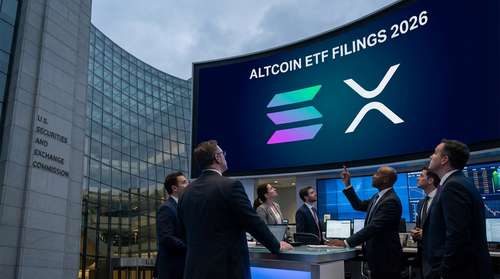
The landscape of digital finance is undergoing a monumental shift this weekend. Over the past 48 hours, a record-breaking wave of Altcoin ETF filings 2026 officially entered the U.S. Securities and Exchange Commission's 75-day expedited review window, signaling a historic pivot for the second quarter. Following the implementation of the SEC's streamlined regulatory framework in late 2025, the U.S. market is rapidly transitioning from a purely Bitcoin-centric investment landscape to a diversified digital asset environment. For institutional players eager to expand their portfolios, this weekend's flurry of application acceptances represents the most significant breakthrough since the launch of the first spot Bitcoin funds.
How the SEC Generic Listing Standards Accelerated Q2 Filings
The primary catalyst behind this unprecedented Q2 surge is the full utilization of the new SEC Generic Listing Standards. Approved in September 2025, these standards effectively compressed the arduous ETF approval timeline from a sluggish 240 days down to a highly efficient 75 days for qualifying assets. By allowing exchanges like Cboe BZX, Nasdaq, and NYSE Arca to list commodity-based digital asset trusts without individualized, case-by-case rule filings, the SEC cleared the biggest bottleneck to market innovation.
This modernized SEC crypto regulatory framework requires underlying assets to have a demonstrated history of trading on regulated futures markets, specifically CFTC-regulated designated contract markets (DCMs), or to meet other strict surveillance-sharing criteria. By standardizing the approval pipeline, the regulatory pendulum has swung from existential friction to operational efficiency. Asset managers are no longer facing blind rejections; instead, they have a clear, rules-based roadmap to bring diverse crypto products to the traditional finance sector.
As a result, we are seeing asset managers file comprehensive prospectuses that bundle multiple digital assets. The days of fighting tooth and nail for a single commodity classification are over, replaced by a streamlined rush to capture market share across a wide spectrum of decentralization technologies.
Solana ETF Approval Status Sets the Stage for Q2
If late 2025 was about breaking through the regulatory ice, 2026 is about scaling. The current Solana ETF approval status provides the perfect blueprint for the altcoin rush. Following the successful launches of the 21Shares and VanEck Solana ETFs late last year—and Bitwise's massive $56 million debut—the path for scalable, high-performance blockchains in the traditional market is now firmly cemented in place.
As we navigate Q2 2026, Wall Street digital asset news is dominated by the second wave of Solana-based filings, alongside complex staking products designed to capture network yields. Analysts are closely watching the inflows, which have steadily grown since the government shutdown delays of late 2025 were resolved. The overwhelming success of these initial SOL funds has provided the necessary confidence for issuers to push forward with applications for tokens like Chainlink, fundamentally altering the fabric of the ETF ecosystem. With institutional clients demanding exposure to Layer-1 networks beyond Ethereum, Solana has established itself as the premier high-throughput asset for traditional wealth management portfolios.
XRP Commodity Classification Triggers a Chain Reaction
The regulatory clarity extended well beyond Solana just weeks ago. On March 17, 2026, a joint interpretive release from the SEC and CFTC finally solidified the XRP commodity classification, legally placing it on the exact same footing as Bitcoin and Ethereum. This landmark regulatory decision dissolved the last remnants of statutory ambiguity that had previously stalled comprehensive institutional adoption.
With the critical March 27 SEC deadline now in the rearview mirror for a massive batch of crypto applications, issuers are moving aggressively over the last two days to file secondary market products. The XRP ETF market is already heating up, with early entrants like Canary Capital, Franklin Templeton, and REX-Osprey having absorbed nearly $1.44 billion in cumulative inflows by early 2026. This newly cemented commodity status opens the floodgates for even larger traditional finance titans to finalize their own S-1s and 19b-4s. We are witnessing the maturation of institutional crypto investment, where legacy banking giants finally feel legally protected enough to accumulate major positions in XRP and other blue-chip altcoins.
The Future of Institutional Crypto Investment
We are officially entering the golden era of altcoin exchange-traded products. With Solana and XRP securing their institutional footholds, Wall Street's attention is rapidly pivoting to decentralized oracle networks like Chainlink (LINK) and other critical blockchain infrastructure assets. Just yesterday, several major asset managers submitted new 19b-4 forms explicitly targeting Chainlink, pushing the envelope of the new guidelines. The 75-day expedited review window means that these applications filed this weekend will likely see final determinations by late June, setting the stage for a spectacular third quarter.
What to Expect Next for Digital Asset Markets
For investors keeping a close eye on the latest Altcoin ETF filings 2026, the strategy is abundantly clear. The focus has entirely shifted from "will the SEC approve?" to "which asset meets the generic listing criteria next?" As infrastructure and liquidity thresholds are successfully met on the Chicago Mercantile Exchange (CME) and other regulated venues, the barrier to entry for new token ETFs will continue to drop.
The diversification of digital assets on Wall Street is no longer a speculative theory—it is an operational reality. Fund managers are now tasked with analyzing tokenomics, on-chain revenue, and network utility rather than just predicting regulatory headwinds. As Q2 unfolds, expect the race for dominance in the altcoin ETF sector to accelerate, bringing unprecedented liquidity and validation to the broader cryptocurrency market.