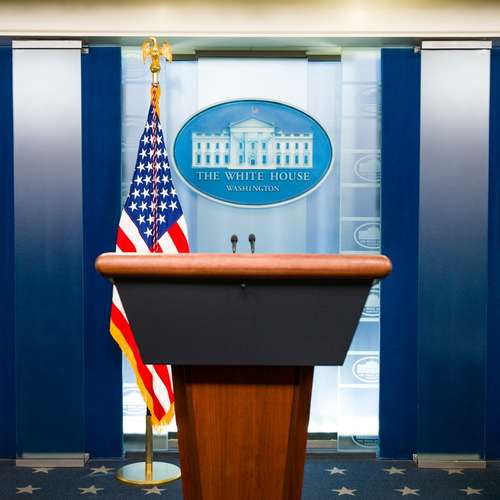
The landscape of American technology is undergoing a seismic shift. In a major move to solidify the United States as the undisputed global leader in artificial intelligence, the White House officially released the National AI Framework 2026. This landmark initiative aims to streamline the rapidly expanding—and often conflicting—web of state-level tech laws into a cohesive national strategy. To help guide this ambitious overhaul, the administration has appointed a powerhouse roster of industry veterans to a newly revived advisory board, merging Silicon Valley hardware expertise and digital asset innovation with federal legislative goals.
Pushing for a Unified Federal AI Policy
Released on March 20, 2026, the White House’s legislative recommendations outline a clear, aggressively pro-innovation vision for the future of US AI regulation. At the core of the administration’s strategy is a strong push for AI state law preemption. Over the past few years, states like California, New York, and Colorado have enacted a complex patchwork of compliance regimes. The newly unveiled framework argues that this fragmented approach stifles innovation, drives up compliance costs, and burdens early-stage startups.
Instead of creating a new federal watchdog agency, the administration advocates for a "light-touch" environment utilizing existing sector-specific agencies and industry-led standards. The ultimate goal is to cement a federal AI policy that prioritizes economic growth while implementing targeted safeguards for child safety, intellectual property, and free speech. This strategy involves establishing regulatory sandboxes that allow developers to test frontier models without the immediate threat of regulatory enforcement.
The TRUMP AMERICA AI Act Hits the Senate
Running parallel to the White House's policy blueprint is a massive legislative effort in the Senate. Introduced by Senator Marsha Blackburn on March 18, 2026, the TRUMP AMERICA AI Act represents the most comprehensive attempt to codify these national standards to date. Formally known as The Republic Unifying Meritocratic Performance Advancing Machine Intelligence by Eliminating Regulatory Interstate Chaos Across American Industry Act, the 291-page omnibus bill is designed to unleash innovation while protecting what the bill’s sponsors refer to as the "4 Cs": children, creators, conservatives, and communities.
The legislation actively shapes the National AI Framework 2026 by incorporating existing bipartisan efforts like the Kids Online Safety Act (KOSA) and the NO FAKES Act. It also proposes a federal product liability framework for AI systems and mandates annual independent audits for high-risk platforms to detect viewpoint discrimination. If passed, it would drastically alter the compliance landscape for every major tech firm operating in the United States.
Protecting Creators and Expanding Infrastructure
Beyond algorithmic accountability, the framework places significant emphasis on the physical infrastructure powering the generative AI boom. The rapid proliferation of data centers has sparked widespread concerns over energy consumption and grid reliability. To counter this, lawmakers are proposing streamlined federal permitting for on-site power generation at AI facilities. This ensures that expanding compute capacity does not translate to surging electricity rates for local residents.
Simultaneously, the proposed US AI regulation creates a federal right of publicity. This protects individuals from the unauthorized commercial use of AI-generated replicas of their voice or likeness—a critical safeguard as deepfake technology becomes increasingly accessible to the public.
Heavyweights Join the Presidential Tech Council
To ensure these legislative and executive efforts align with cutting-edge technological realities, the administration rebooted the President’s Council of Advisors on Science and Technology (PCAST). Announced on March 25, 2026, the initial 13-member council reads like a who’s who of the digital economy. Co-chaired by White House AI and crypto czar David Sacks alongside science advisor Michael Kratsios, the group will advise the Oval Office on maintaining competitive dominance in AI, quantum computing, and biotechnology.
The appointments signal a robust convergence of machine learning and digital asset markets. The inclusion of Fred Ehrsam, Coinbase co-founder, demonstrates a clear commitment to integrating blockchain and decentralized finance perspectives into broader technology frameworks. Ehrsam’s appointment follows a highly public split within the digital asset industry earlier in the year regarding the Digital Asset Market Clarity Act, rewarding executives who maintained a collaborative dialogue with lawmakers.
Furthermore, the Jensen Huang tech council appointment highlights the administration’s intense focus on hardware. As the CEO of Nvidia, Huang brings critical, unmatched insights into semiconductor export controls, raw computing power, and the complex supply chains required to build modern AI models. They are joined by other industry titans, including Meta’s Mark Zuckerberg, Oracle’s Larry Ellison, and AMD’s Lisa Su.
Navigating the Future of US AI Regulation
The road ahead for these sweeping reforms will undoubtedly face intense legislative hurdles. While Republican leadership in the House has signaled strong support for a unified national rulebook, the debate over centralized control remains highly contested. Lawmakers opposing the federal override recently introduced the GUARDRAILS Act, designed to preserve the ability of individual states to enact stricter, localized protections against emerging technological risks.
Despite the looming congressional battles, the administration's coordinated actions this March mark a definitive turning point for federal AI policy. By combining the statutory weight of the TRUMP AMERICA AI Act with the strategic, hands-on guidance of elite industry leaders, Washington is making its most aggressive play yet to centralize oversight. For developers, enterprises, and investors, the message is clear: the National AI Framework 2026 signals that the era of fragmented state oversight may soon give way to a singular, pro-growth national standard.