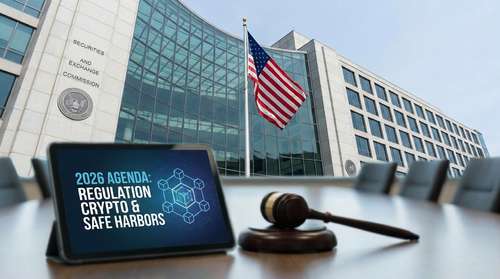

A seismic shift in federal oversight is underway following the appointment of Todd Blanche as interim head of the Justice Department on April 2, 2026. Replacing Pam Bondi after her unexpected dismissal by President Donald Trump, the elevation of the Todd Blanche Attorney General tenure is sending immediate ripples through the digital asset markets. As the primary architect of the administration's dramatic pullback from aggressive industry oversight, Blanche now commands the very agency tasked with executing his vision.
For market participants, venture capitalists, and legal analysts, the move represents the clearest signal yet that the era of aggressive federal crackdowns on technical non-compliance has effectively ended. Instead of pursuing software developers and platform founders for complex licensing disputes, the current administration is cementing a legal doctrine that favors strict fraud enforcement over regulatory technicalities. The appointment places a figure with a documented record of prosecutorial restraint at the absolute helm of American law enforcement.
Disbanding the National Cryptocurrency Enforcement Team
The foundation of this shifting landscape was laid in April 2025 when Blanche, then serving as Deputy Attorney General, authored a controversial directive titled "Ending Regulation by Prosecution". This landmark DOJ crypto enforcement memo fundamentally rewired federal priorities, drawing a sharp line between traditional criminal acts and mere technical infractions. Most notably, the directive ordered the immediate disbanding of the National Cryptocurrency Enforcement Team (NCET), a specialized unit launched in 2022 that had previously spearheaded high-profile investigations into illicit digital finance.
Under the new framework, federal prosecutors were explicitly instructed to stand down from cases targeting virtual currency exchanges, offline wallets, and mixing services for the mere acts of their end users. The strategy pivots away from enforcing the Bank Secrecy Act and prosecuting unregistered money transmitting businesses. Instead, the focus has shifted entirely toward combating bad actors who actively victimize digital asset investors or use decentralized platforms to fund terrorism, narcotics, and human trafficking. By redirecting the Market Integrity and Major Frauds Unit to other priorities, the Justice Department has formally recused itself from acting as a de facto market regulator.
A Shift in Crypto Prosecutorial Discretion
This redefined crypto prosecutorial discretion directly limits the scope of what federal attorneys can pursue. By stepping back from regulatory offenses, the department is deferring to legislative efforts and financial regulators to establish clear rules of the road for the expanding decentralized finance (DeFi) sector. Software developers are no longer automatically assumed to be culpable for how third parties utilize open-source smart contracts on public blockchains.
Real-World Consequences: The Tornado Cash Prosecution
The policy overhaul is not merely theoretical; it is actively reshaping live litigation. The most prominent example is the ongoing Southern District of New York case against Roman Storm, a core developer for the cryptocurrency mixer Tornado Cash. Originally indicted on multiple charges, including operating an unlicensed money transmitting business, Storm's defense team leaned heavily into the changing political winds.
Following the release of the Blanche directive, prosecutors formally dropped the charge related to failing to register with the Financial Crimes Enforcement Network (FinCEN) under 18 U.S.C. 1960(b)(1)(B). While Storm still faces trial later this year for allegedly facilitating the transmission of known criminal proceeds linked to the North Korean Lazarus Group, the narrowed scope of the indictment highlights a crucial distinction. The government is no longer criminalizing the creation of immutable code or the failure to register non-custodial privacy tools, provided the developers are not actively participating in the underlying laundering operations.
Ethical Scrutiny Amidst Changing Priorities
While the industry has largely celebrated the relaxed federal posture, the leadership transition has triggered intense scrutiny from transparency advocates. Ethical questions have surfaced regarding Blanche's personal financial interests prior to authoring the enforcement pullback. Disclosures revealed by investigative journalists highlighted that he held between $159,000 and $485,000 in various digital assets—including Bitcoin, Ethereum, Cardano, and Solana—when the initial memorandum was signed.
Although subsequent July 2025 filings indicate these assets were transferred to family members, the timeline has drawn sharp criticism from watchdog groups concerned about potential conflicts of interest at the highest levels of law enforcement. Critics argue that drafting policies that directly shield a specific financial sector while maintaining personal exposure to it blurs the line of impartial justice.
What the Trump Crypto Policy Means for 2026
Despite the ethical debates, the broader Trump crypto policy is moving forward aggressively, executing on campaign promises to end the regulatory weaponization of federal agencies. The administration views decentralized networks as vital to American economic innovation, actively dismantling the previous administration's enforcement-heavy approach. Whether Blanche remains in the top post permanently—reports suggest Environmental Protection Agency Administrator Lee Zeldin is also under consideration for the permanent role—the current momentum heavily favors the digital asset sector.
As we navigate the complexities of US crypto regulation 2026, this latest Department of Justice news confirms that the prosecutorial guardrails are securely locked in place. By drawing a distinct line between regulatory violations and criminal fraud, the current administration is offering developers, decentralized autonomous organizations (DAOs), and decentralized platforms the legal breathing room they have sought for years.