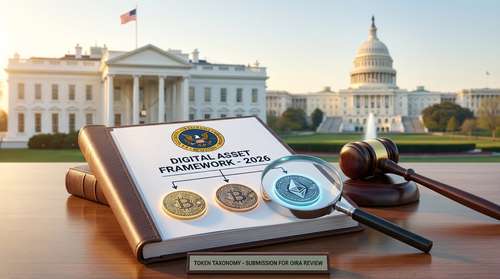
In a historic move that could finally end years of regulatory ambiguity, the U.S. Securities and Exchange Commission (SEC) has officially submitted a comprehensive token taxonomy framework to the White House. This long-awaited interpretative guidance, delivered to the Office of Information and Regulatory Affairs (OIRA) earlier this week, marks a pivotal shift in SEC crypto regulation 2026. For the first time, federal regulators are moving to formally categorize digital assets, distinguishing between securities, commodities, and consumer tokens without waiting for new legislation to clear the Senate deadlock.
Defining the Rules: Inside the New Token Taxonomy Framework
The core of the SEC's submission is a detailed "token taxonomy" designed to categorize crypto assets based on their underlying economic reality rather than just their marketing. Unlike previous enforcement-driven actions, this SEC interpretative guidance provides a proactive rubric for developers and issuers. Sources close to the commission indicate the framework breaks digital assets into four primary categories: digital commodities, digital collectibles, digital tools (utility tokens), and tokenized securities.
Under the leadership of Chairman Paul Atkins, the agency is pivoting away from the "regulation by enforcement" era. "This framework is about precision," says legal analyst Sarah Jenkins. "If a token functions as a digital collectible or a software tool, this guidance suggests it won't be suffocated by crypto securities laws meant for stock offerings. It’s the clarity the market has been begging for since 2020."
The White House OIRA Crypto Review Process
The submission has now entered the White House OIRA crypto review phase, a critical bureaucratic step before the guidance can be published in the Federal Register. OIRA, known as the regulatory gatekeeper, will evaluate the economic impact of the framework. This review process typically takes 30 to 90 days, meaning the industry could see official publication by early summer 2026.
This commission-level interpretation carries significantly more legal weight than the staff-level bulletins of the past. By securing White House approval, the SEC aims to create a durable standard that can withstand judicial scrutiny, providing a stable foundation for institutional capital to enter the market. The move is also seen as a strategic alignment with the Commodity Futures Trading Commission (CFTC), which simultaneously submitted its own rules regarding prediction markets.
A Regulatory Bypass for the Stalled CLARITY Act?
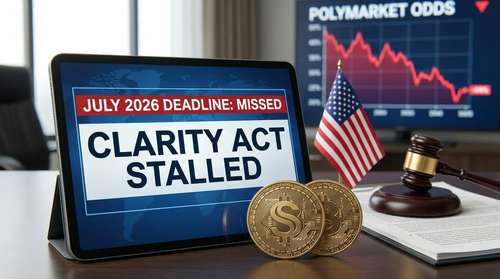
Political analysts view this administrative maneuver as a direct response to the legislative logjam in Congress. While the Digital Asset Market Clarity Act (CLARITY Act) passed the House with bipartisan support in 2025, it remains stalled in the Senate Banking Committee due to disputes over stablecoin yields. By advancing this guidance independently, the SEC is effectively implementing a "Plan B" to operationalize key aspects of the crypto market structure bill without waiting for a polarized Congress to act.
"The administration is signaling that they won't let legislative gridlock hold back American financial innovation," explains policy expert Marcus Thorne. "If the Senate won't pass the Digital Asset Market Clarity Act, the regulators are showing they have the authority to clean up the market structure themselves." This dual-track approach ensures that even if the bill dies in committee, the industry still gets the regulatory guardrails it needs to mature.
Market Impact: What This Means for Investors
The immediate reaction from the crypto market has been cautiously optimistic. Major tokens surged on the news, anticipating that the new taxonomy will exempt established decentralized assets from onerous registration requirements. Institutional investors, who have long cited regulatory risk as their primary barrier to entry, are reportedly preparing to increase their exposure once the guidance is finalized.
However, compliance burdens will likely shift. Projects that clearly fall into the "tokenized security" bucket under the new token taxonomy framework will face stricter enforcement if they fail to register. The era of ambiguity is ending; the SEC is drawing a bright line in the sand. For legitimate projects, this offers a path to compliance. For unregistered securities masquerading as utility tokens, the window of opportunity is rapidly closing.