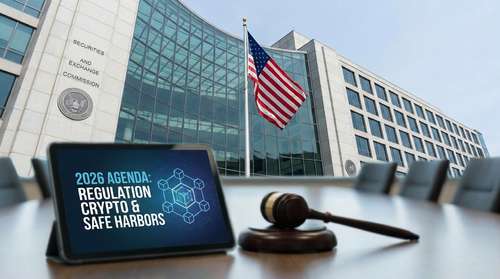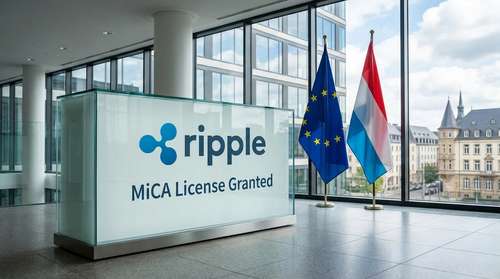

The financial world experienced a seismic shift this week as regulators officially tore down the primary wall separating traditional banking from the digital asset sector. On April 7, 2026, breaking news confirmed that with SEC SAB 122 rescinded, Wall Street witnessed an immediate market surge across major cryptocurrencies. This highly controversial accounting guidance previously required financial institutions to treat custodied digital assets as liabilities on their balance sheets, effectively paralyzing the banking sector's ability to engage with the crypto ecosystem.
By removing this punitive 1:1 capital reserve requirement, the government has given the green light for massive institutional capital inflows. The immediate aftermath saw Bitcoin and top altcoins rally violently as major banking consortiums signaled their intent to launch direct holding services within the quarter. For the first time, traditional lenders have a clear, economically viable path to interact directly with decentralized networks.
Crypto Custody for Banks: A Historic Turning Point
For years, American financial institutions watched from the sidelines while independent exchanges dominated the digital asset space. The core issue was the SEC's stringent accounting approach, which made offering secure wallets commercially unviable for publicly traded lenders. Because of the added cost and regulatory ambiguity, the accounting guidance had aggressively deterred many banks from offering protective services. Now that the SEC SAB 122 rescinded policy is officially in effect, that prohibitive barrier is completely gone.
The direct impact on crypto custody for banks is immense. As an everyday consumer, you will soon be able to view your Bitcoin and digital commodity balances right next to your checking and savings accounts in standard banking applications. Financial institutions can finally evaluate risks using standard contingency frameworks rather than locking up matching capital for every single token they hold for a customer.
The SEC CFTC Joint Interpretation Clears the Path
This week's historic banking pivot did not happen in a vacuum. It directly builds upon the landmark SEC CFTC joint interpretation issued just weeks ago on March 17, 2026. For over a decade, regulatory ambiguity forced the industry into a jurisdictional tug-of-war. The historic March agreement ended the confusion by establishing a comprehensive five-part classification framework for digital assets.
A critical element of this interagency framework is the new digital commodity taxonomy. By formally categorizing major native tokens—including Bitcoin, Ethereum, and Solana—as digital commodities rather than securities, the agencies provided the exact legal clarity banking compliance departments demanded. The agencies clarified that a non-security crypto asset only becomes subject to securities laws when sold with promises of future managerial efforts, protecting the underlying asset's inherent status. This defining moment in US digital asset regulation 2026 ensures that banks know exactly which assets they can safely hold without inadvertently violating unregistered securities laws.
Rolling Out Bank-Grade Crypto Services
With the legal and accounting roadblocks entirely dismantled, the race is on among prime brokers and regional lenders to capture market share. Top-tier financial institutions are already rolling out bank-grade crypto services designed to mitigate the security vulnerabilities frequently associated with traditional retail exchanges. These upcoming offerings feature institutional-grade multi-party computation (MPC) wallets, rigorous insurance coverage, and integrated tax reporting systems that native crypto platforms have historically struggled to perfect.
Regional banks are also aggressively partnering with established digital infrastructure providers to fast-track their own custodial products. Industry analysts project that having the SEC SAB 122 rescinded rule on the books will lead to thousands of U.S. banks offering some form of digital asset service by the end of the year. This democratization of access fundamentally changes how the average American interacts with blockchain technology, making it as seamless as trading traditional equities.
What This Means for Global Markets
The ripple effects of this regulatory clarity are already reaching beyond American borders. Now that US digital asset regulation 2026 has provided a robust, clear template for integrating decentralized assets into legacy finance, European and Asian markets are feeling the pressure to adapt their own frameworks. Global demand for secure, regulated custody is forcing international regulators to reconsider their own capital reserve constraints.
Accelerating Institutional Crypto Adoption
While mainstream retail access is a massive consumer win, the true driver behind this week's sustained market surge is the promise of accelerated institutional crypto adoption. Pension funds, sovereign wealth funds, and massive corporate treasuries operate under strict mandates requiring them to use qualified custodians. Until now, the lack of traditional banking options severely capped their ability to allocate capital to digital assets.
The combined force of the SEC CFTC joint interpretation and the death of prohibitive accounting bulletins finally satisfies the strict fiduciary requirements of these massive capital allocators. Wall Street is already restructuring its portfolios to reflect this new reality. As traditional finance and decentralized networks officially merge, the financial landscape is setting a completely new baseline for the global economy, proving that digital assets are now a permanent fixture on the institutional balance sheet.