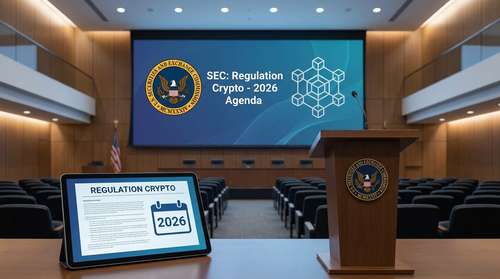

In a watershed moment for the cryptocurrency industry, Securities and Exchange Commission (SEC) Chairman Paul Atkins signaled a definitive end to the era of "regulation by enforcement" during his keynote address at ETHDenver 2026. Speaking to a packed audience of developers and industry leaders, Atkins announced the agency's plan to introduce a groundbreaking "innovation exemption" for tokenized securities, a move that promises to bridge the divide between traditional finance and decentralized protocols.
A New Safe Harbor for Crypto Innovation
The centerpiece of Atkins' address was the proposed innovation exemption, a regulatory safe harbor designed to allow financial institutions and crypto-native firms to pilot the trading of digital assets on automated market makers (AMMs) and other decentralized liquidity platforms. This framework addresses a long-standing grievance from the industry: the lack of a legal pathway to experiment with novel blockchain technologies without fear of immediate enforcement action.
Under the new proposal, issuers who meet specific disclosure requirements and utilize specialist transfer agents for whitelisting will be granted a temporary exemption from certain exchange registration rules. This allows for the controlled testing of tokenized equities and real-world assets (RWAs) on public blockchains. "Our rules should not become barriers to innovation," Atkins stated, emphasizing that the SEC's role is to ensure transparency, not to pick winners and losers in the technology race.
The 'Storage Unit' Analogy: Managed Risk
Joining Atkins on stage, SEC Commissioner Hester Peirce offered a vivid analogy to explain the Commission's cautious yet forward-looking approach. She compared the current state of tokenized assets to "buying the contents of an abandoned storage unit blind."
"Some startups expect to find gold bars among the unit's contents, while some traditional financial entities fear the storage unit contains a monster that will swallow all of TradFi in one ugly bite," Peirce remarked. The innovation exemption, she explained, is designed to be a modest, incremental step—essentially turning on the lights in that storage unit. It provides "regulatory breathing room" for valid experiments while maintaining essential safeguards like trading volume caps and sunset provisions to prevent permanent regulatory loopholes.
End of 'Regulation by Enforcement'
Perhaps the most significant tonal shift came with Atkins' explicit rejection of his predecessor's aggressive litigation strategy. The Chairman confirmed that the SEC is pivoting toward a "notice and comment" rulemaking process, prioritizing clear, written guidance over lawsuits. This shift is part of a broader initiative dubbed "Project Crypto," a joint effort with the Commodity Futures Trading Commission (CFTC) to harmonize definitions and oversight.
"It is not the regulator's job to worry about the daily swings of the markets," Atkins told the crowd, dismissing calls for emergency intervention during recent market volatility. "People whose only focus is on the number always going up are likely to be disappointed. Put your nose to the grindstone and work to build things that matter."
Industry Reaction: TradFi and DeFi Converge
The announcement has elicited a wave of cautious optimism across the spectrum of financial services. For traditional giants like Nasdaq and the DTCC, the exemption is seen as a validation of their ongoing efforts to integrate blockchain technology into settlement layers. Meanwhile, crypto-native platforms like Kraken and Robinhood are expected to leverage the new rules to expand their offerings of tokenized stocks and commodities.
Legal experts predict that this move will trigger a surge in venture capital investment into "RegTech" solutions—software designed to help decentralized protocols comply with the new whitelist and disclosure mandates. By providing a legal path for tokenized securities to exist on-chain, the SEC is effectively inviting Wall Street to build on Ethereum and other public ledgers.
What's Next for SEC Crypto Regulation in 2026?
While the innovation exemption is a major headline, it is just one part of a comprehensive roadmap for 2026. The SEC is also advancing rules to modernize custody requirements for broker-dealers dealing in non-security digital assets and is working to clarify the application of the "Howey Test" to various asset classes.
With the legislative backdrop of the GENIUS Act and CLARITY Act moving through Congress, the U.S. regulatory environment is rapidly shifting from hostile territory to a structured, albeit strict, marketplace. As the pilot programs launch later this year, the world will be watching to see if this new "middle ground" can finally unlock the true potential of decentralized finance.