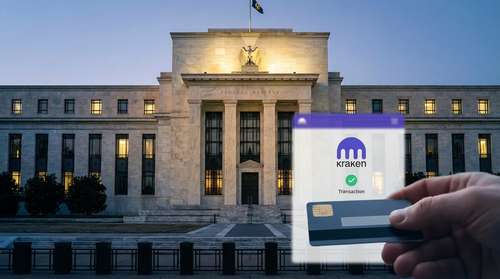
In a watershed moment for the digital asset industry, the Federal Reserve Bank of Kansas City has officially granted Kraken Financial a "limited purpose" master account, making it the first crypto-native institution in U.S. history to gain direct access to the central bank's payment rails. This historic approval, announced on Wednesday, allows the exchange's Wyoming-chartered banking arm to settle transactions directly via Fedwire, effectively bypassing traditional banking intermediaries. The move signals a major shift in fintech regulatory breakthrough efforts, bridging the long-standing divide between Wall Street and the blockchain economy.
Breaking Down the Kraken Fed Master Account Approval
The approval concludes a grueling five-year application process for Kraken Financial, which operates as a Special Purpose Depository Institution (SPDI) under Wyoming state law. By securing this Kraken Fed Master Account, the firm moves from being a "Tier 3" applicant—a category reserved for novel financial institutions subject to the strictest regulatory scrutiny—to a fully integrated participant in the U.S. payments system.
However, the access comes with specific guardrails. The Federal Reserve has designated this as a "limited purpose" or "skinny" account. While it grants Kraken the ability to hold reserves and clear payments directly, it does not provide access to the Fed's discount window or pay interest on reserve balances—privileges still reserved for traditional insured depository institutions. Despite these restrictions, the approval represents a massive validation of the digital asset infrastructure 2026 landscape.
Direct Access to Crypto Payment Rails
For years, crypto exchanges have relied on a patchwork of intermediary banks to process U.S. dollar deposits and withdrawals. This dependency created layers of counterparty risk, higher fees, and slower settlement times. With this new Federal Reserve crypto access, Kraken can now execute wire transfers and settle fiat positions with the same speed and finality as a commercial bank. Co-CEO Arjun Sethi described the milestone as "the convergence of crypto infrastructure and sovereign financial rails," noting that the firm can now operate as a "directly connected financial institution" rather than a peripheral participant.
The Significance for Digital Asset Infrastructure in 2026
The timing of this decision is critical. Following the passage of the Genius Act and a shifting regulatory stance under the current administration, federal regulators are beginning to acknowledge the permanence of digital assets. This Kraken banking license success story validates the Wyoming SPDI model, which requires banks to hold 100% of customer deposits in liquid assets, prohibiting the fractional reserve lending practices that doomed previous crypto-friendly banks.
By integrating directly with Fedwire, Kraken lays the groundwork for "atomic settlement"—the instant, simultaneous exchange of assets and cash. This capability is essential for institutional adoption, where large-scale capital movements require absolute certainty and immediate liquidity. Analysts at TD Cowen suggest this approval creates a roadmap for other qualified crypto payment rails to follow, potentially ending the era of "de-banking" that has plagued the sector.
Industry Reactions and Future Implications
The decision has sparked a polarized response across the financial sector. Crypto advocates view the Fedwire Kraken approval as the ultimate legitimacy stamp, proving that compliant digital asset firms can meet the high bar of federal safety and soundness. "This is what it looks like when crypto infrastructure matures into core financial infrastructure," Sethi added in his statement.
Conversely, traditional banking trade groups have expressed caution. The Independent Community Bankers of America (ICBA) released a statement concerned that granting Federal Reserve crypto access to non-traditional banks could introduce new risks to the payment system. Kansas City Fed President Jeff Schmid addressed these concerns by emphasizing that the "integrity and stability of the U.S. payments system remain our priority," citing the strict limitations placed on Kraken's account as a necessary buffer.
As the first domino falls, the focus now shifts to how this connectivity will reshape market dynamics. With the ability to offer near-instant fiat settlements 24/7, Kraken has established a competitive moat that may force other major U.S. exchanges to pursue their own fintech regulatory breakthrough strategies or risk falling behind in the race for institutional dominance.