
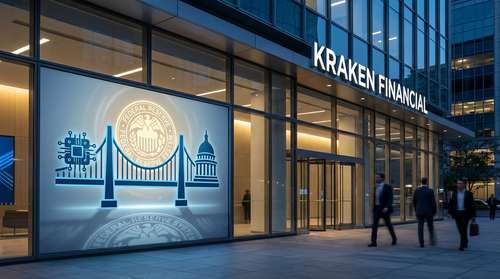
The convergence of traditional finance and decentralized markets reached a historic milestone this week as new details emerged surrounding the unprecedented Kraken Federal Reserve approval. Marking a massive shift in the United States financial landscape, the firm has officially become the first digital asset-focused institution to secure a crypto master account from the Federal Reserve Bank of Kansas City. This groundbreaking authorization grants the company a direct gateway to the U.S. payment system, enabling it to settle transactions without relying on intermediary commercial banks. For an industry that has spent years fighting for mainstream financial legitimacy, this direct connectivity represents a profound leap forward.
The Breakthrough: Unlocking Digital Asset Bank Access
For years, cryptocurrency firms have lobbied heavily for deeper integration with central banking infrastructure, with some institutions even suing the central bank to force access. Now, true digital asset bank access is a reality. The limited-purpose master account allows the company to bypass correspondent banking hurdles, creating a direct operational link to the U.S. central banking system.
One of the most immediate and impactful benefits of this integration is the enablement of Fedwire crypto settlement. By utilizing the Fedwire funds transfer system, the platform can execute large-dollar U.S. fiat payments instantly. This capability lowers operational costs, increases settlement speed, and eliminates the frustrating bottlenecks that have traditionally plagued fiat-to-crypto gateways, providing institutional clients with a vastly superior trading environment.
Wyoming SPDI Regulations and the Path to Approval
This victory didn’t materialize overnight. It is the result of over five years of rigorous regulatory engagement and extensive operational scrutiny. Central to this success are the innovative Wyoming SPDI regulations. Operating as a Special Purpose Depository Institution, the Kraken Financial banking division is structured on a strict, full-reserve model.
Unlike traditional fractional reserve banking, this Wyoming-chartered subsidiary is legally required to hold liquid assets equal to or exceeding 100% of its client fiat deposits. This stringent, risk-averse framework provided the Kansas City Fed with the necessary assurances regarding safety, soundness, and consumer protection to greenlight the application. The approval validates Wyoming's pioneering legislative efforts to create a safe harbor for digital asset institutions seeking federal recognition.
Strict Limitations: The Reality of the Crypto Master Account
Despite the euphoria surrounding the approval, recent disclosures from mid-April 2026 clarify that this is a tightly controlled arrangement. Federal Reserve Vice Chair Michelle Bowman recently characterized the structure as "a bit of an experiment," underscoring that the firm does not possess full central banking privileges. The crypto exchange will not earn interest on its reserve balances and is explicitly barred from utilizing the Fed’s emergency lending facilities, commonly known as the discount window. Furthermore, this "skinny" iteration of the master account does not include access to the automated clearing house (ACH) network or the instant payment system, FedNow.
Regulatory Backlash and the Push for Transparency
The historic decision has not been without significant controversy. Over the past two days, the approval has drawn fierce scrutiny from traditional banking advocates and politicians. The American Bankers Association and prominent lawmakers, including Representative Maxine Waters, the top Democrat on the House Financial Services Committee, have voiced deep concerns over systemic risks and a perceived lack of transparency in the Kansas City Fed's approval process.
Waters has formally requested additional details on the risk-management protocols tied to this novel integration, demanding answers by the end of the week. The political backlash highlights the ongoing tension between financial innovation and systemic risk management, with critics arguing that allowing crypto-native firms access to sovereign rails could introduce unprecedented vulnerabilities to the broader financial system.
Institutional Bitcoin 2026: Bridging Crypto and Fiat
Despite the regulatory pushback, this integration fundamentally alters the market infrastructure for digital assets. As we look at the landscape of institutional Bitcoin 2026, major financial players require robust, regulated, and seamless on-ramps to manage multi-million dollar capital deployments. Direct Federal Reserve connectivity reduces counterparty risk and allows for far greater capital efficiency for large-scale block trading.
Arjun Sethi, co-CEO of Kraken, noted that this architecture could eventually facilitate atomic settlement between fiat currency and cryptocurrencies. As crypto infrastructure matures into core financial infrastructure, this initial one-year limited account term will serve as the crucial blueprint for how decentralized finance interacts with sovereign fiat rails in the years to come. If the pilot proves successful without introducing illicit finance or operational risks to the Fed's balance sheet, it may trigger a tidal wave of institutional adoption, forever changing how digital wealth is managed and transferred.