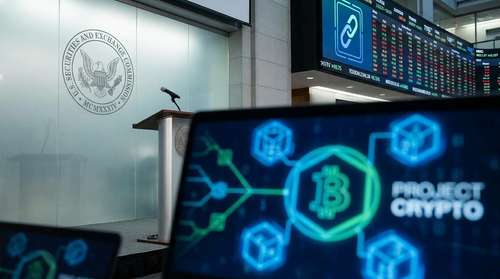

The landscape of American finance crossed a permanent threshold this week. Following the Treasury Department’s April 8, 2026, release of joint proposed rules to counter illicit finance, the guardrails for a robust digital economy are finally in place. By formally implementing the GENIUS Act stablecoin requirements and building upon the earlier reality of SEC SAB 121 rescinded, Washington has signaled a massive green light to Wall Street. The days of regulatory ambiguity keeping traditional financial heavyweights on the sidelines are effectively over.
For years, institutional capital faced insurmountable hurdles when interacting with blockchain infrastructure. Onerous accounting standards and a lack of clear stablecoin guidelines created a chilling effect across the banking sector. Today, the synthesis of a pro-innovation SEC crypto policy shift and modernized crypto banking laws is unlocking billions in institutional digital asset custody and reshaping global market dynamics.
The Impact of Having SEC SAB 121 Rescinded
To understand the current institutional floodgates, you have to look at the removal of the industry’s biggest roadblock. Under the original Staff Accounting Bulletin 121 (SAB 121), the Securities and Exchange Commission required entities safeguarding crypto assets to record those assets as liabilities on their own balance sheets. For highly regulated prudential banks, this meant absorbing devastating capital penalties just to hold customer funds.
That paradigm shifted completely when the agency formally rolled back the restrictive guidance via SAB 122. With SEC SAB 121 rescinded, traditional custodians are no longer penalized for providing digital wallet services. The accounting treatment of crypto now mirrors traditional assets held in custody—kept safely off the balance sheet, eliminating the artificial barriers that kept commercial banks from competing with native crypto exchanges.
Reviving Wall Street's Blockchain Ambitions
The market response has been swift and decisive throughout early 2026. Major players like BNY Mellon and US Bank, which previously paused or scaled back their digital asset operations, are rapidly expanding their footprints. State Street and other heavyweights have accelerated their institutional digital asset custody offerings, recognizing that the removal of these friction points makes tokenized deposits and on-chain collateral management commercially viable.
Complementing this shift, the Office of the Comptroller of the Currency (OCC) provided further certainty, confirming that national banks can actively provide and outsource crypto-asset custody and execution services. This practical clarity surrounding execution and outsourcing gives regulated institutions the precise building blocks needed to integrate digital assets into their core operations.
GENIUS Act Stablecoin: A New Era of Federal Clarity
While the SEC cleared the path for custody, Congress provided the engine for institutional liquidity. The Guiding and Establishing National Innovation for U.S. Stablecoins Act (GENIUS Act) stands as the defining pillar of US crypto regulation 2026. Passed as a bipartisan effort to address the systemic risks of unregulated digital currency, the legislation established the first comprehensive federal framework for Permitted Payment Stablecoin Issuers (PPSIs).
The primary focus of the legislation centers on strict stablecoin reserve requirements. Issuers are now mandated by federal law to maintain a 1:1 reserve backing composed entirely of U.S. dollars, short-term Treasuries, or equivalent low-risk liquid assets. Furthermore, the days of opaque treasury management are gone. The GENIUS Act requires simple, standardized monthly public disclosures of reserve composition and annual audited financial statements for any issuer exceeding $50 billion in market capitalization.
Prioritizing Consumers and Singleness of Money
The legislation deliberately classifies payment stablecoins as a medium of exchange, distinctly separating them from securities or investment assets. To protect the traditional banking sector from shadow-banking competition, the framework prohibits issuers from offering yield or interest on payment stablecoins.
Perhaps the most significant consumer protection mechanism is the insolvency hierarchy. In the rare event of an issuer failure, GENIUS Act provisions grant stablecoin holders legal priority over other creditors, ensuring unparalleled protection for retail and institutional users alike who rely on these tokens for daily settlement.
April 2026 Treasury and FinCEN Implementation
The final puzzle pieces fell into place on April 8, 2026, when the Financial Crimes Enforcement Network (FinCEN) and the Office of Foreign Assets Control (OFAC) issued their joint proposed rules to operationalize the legislation.
The new mandates officially treat PPSIs as financial institutions under the Bank Secrecy Act (BSA). This means issuers must maintain rigorous anti-money laundering (AML) protocols and sophisticated sanctions compliance programs. They are required to have the technological capability to freeze and seize assets in accordance with lawful orders—a critical national security requirement that brings the digital dollar fully into the U.S. regulatory perimeter and satisfies lawmakers' concerns regarding illicit finance.
The Future of Crypto Banking Laws
We are witnessing the most significant transformation of financial infrastructure since the digitization of equities. The synergy between the GENIUS Act framework and the broader SEC crypto policy shift creates a distinct, highly regulated environment. It restricts publicly traded non-financial companies from issuing payment stablecoins, while simultaneously providing traditional banks the clear regulatory mandate they desperately needed.
As Treasury regulators finalize these rules over the coming months, the structural foundation for U.S. digital asset markets is firmly in place. Wall Street now has the regulatory blessing to custody assets, and stablecoins have the legislative clarity to serve as the programmable settlement layer for institutional finance. The reset is complete, and the institutional era of cryptocurrency has officially arrived.