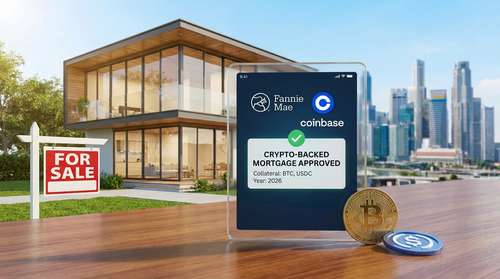
The U.S. residential property market just underwent a radical transformation. For decades, prospective buyers navigating record-high housing prices had to sell off their investments just to afford a down payment. This outdated process triggered hefty capital gains taxes and forced investors to abandon future market upside. That era has officially ended. Following a groundbreaking announcement on Thursday, shares of Better Home & Finance (Nasdaq: BETR) surged 5.41% to close at $33.12, signaling massive Wall Street enthusiasm for their new product. Operating in tandem with the exchange giant, the highly anticipated Fannie Mae Coinbase partnership introduces the first conforming token-backed home loans in American history. This initiative finally allows investors to use crypto for house down payment requirements without liquidating their portfolios. Welcome to the new frontier of crypto-backed mortgages 2026, a development that irrevocably alters the $4.1 trillion mortgage landscape.
The Mechanics of Digital Asset Mortgage Lending
How exactly does this work for the 52 million Americans who currently hold digital wealth? In the past, mortgage underwriters rarely considered on-chain holdings as legitimate reserves unless they were completely converted into fiat currency. Rather than forcing a sale, qualified borrowers can now apply for a standard 15- or 30-year conforming mortgage directly through Better. Simultaneously, they take out a separate, privately financed loan to cover the upfront down payment, using their existing Coinbase accounts to securely pledge their assets.
Securing Bitcoin Mortgage Collateral
The system relies on strict overcollateralization to satisfy agency guidelines. Borrowers must pledge 250% of the down payment value if they use Bitcoin, or 125% if they opt for USDC, a dollar-pegged stablecoin. Both the primary mortgage and the secondary down-payment loan share the same amortization term, seamlessly combined into a single monthly repayment. While total borrowing costs run slightly higher—typically 0.5 to 1.5 percentage points above standard rates—investors successfully preserve their market exposure and completely bypass immediate tax liabilities.
Beating the Volatility Trap: No Margin Calls
Perhaps the most surprising element of this new system is its sophisticated approach to risk. Critics of digital asset mortgage lending frequently point to market volatility as a fatal flaw. What happens if the market crashes the day after you close on a house?
Under the terms established by Better and Coinbase, absolutely nothing. If the value of your pledged Bitcoin plummets, your loan terms remain entirely unchanged. The program issues zero margin calls and requires no additional capital deposits to offset the dip. Liquidation of your Bitcoin mortgage collateral only triggers if you become 60 days delinquent on your routine monthly mortgage payments. This critical protection mirrors traditional default standards, providing unprecedented peace of mind for borrowers navigating the inherent swings of decentralized markets.
Institutional Acceptance and Market Impact
This is not merely a niche fintech experiment; it represents a fundamental regulatory shift. Fannie Mae does not originate loans, but it guarantees them and dictates the strict underwriting standards used across the wider economy. By confirming these crypto-backed structures fit within the conventional, Fannie Mae-eligible box, the government-sponsored enterprise is granting profound legitimacy to on-chain wealth.
The foundation for this move was laid in June 2025, when the Federal Housing Finance Agency (FHFA) directed mortgage entities to prepare for crypto asset inclusion, directly aligning with the Trump administration's broader embrace of the industry. With the median age of a first-time homebuyer hitting 40 late last year, traditional pathways to ownership have become severely strained. According to recent data, nearly 13% of millennial and Gen Z buyers previously had to sell off their tokens to fund home purchases. This program aggressively targets those younger demographics who hold a significant portion of their net worth in digital tokens rather than liquid cash.
Coinbase Real Estate Finance: Redefining Ownership
The ripple effects of this week's launch extend far beyond a single loan product. By positioning itself as the primary institutional custodian for these pledged assets, the exchange is pioneering a highly lucrative new vertical in Coinbase real estate finance. To aggressively drive initial adoption, they are offering eligible Coinbase One members a substantial closing cost rebate equal to 1% of the total mortgage value, capped at a generous $10,000. Furthermore, borrowers who pledge USDC rather than Bitcoin can continue to passively earn yield rewards on their locked collateral. This innovative feature effectively offsets the secondary loan's monthly payments, creating an unprecedented level of capital efficiency.
As regular readers of cryptovot finance news know well, the chasm separating traditional legacy banking from decentralized finance is rapidly vanishing. By integrating seamlessly with Fannie Mae's rigorous guidelines, the industry has proven that on-chain liquidity can interface safely with the rigid parameters of conventional housing finance. Tying the massive U.S. housing sector to decentralized ledger technology proves that these tokens are no longer merely speculative trading instruments. They have matured into highly productive, real-world capital capable of unlocking generational wealth and expanding access to the American dream.