
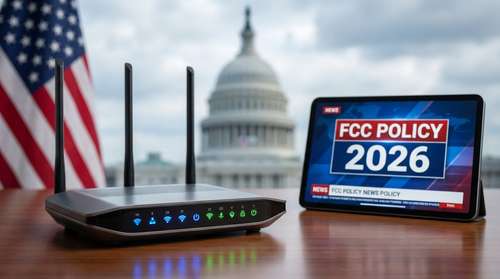
In a sweeping move that fundamentally alters the American technology landscape, the Federal Communications Commission (FCC) has effectively halted the importation and sale of new foreign-made consumer internet routers. Effective immediately as of late March 2026, the regulatory action places all foreign-produced consumer networking hardware on the government's Covered List, designating them as an unacceptable national security risk. For households, small businesses, and enterprise workers operating remotely, the FCC router ban 2026 marks a decisive pivot in how the United States defends its digital borders against increasingly sophisticated state-sponsored cyber threats.
The Catalyst: The Salt Typhoon Router Exploit
The urgency behind this unprecedented market restriction stems directly from a severe escalation in foreign cyber espionage. According to a newly declassified National Security Determination, vulnerabilities in small and home office networking equipment have been weaponized to carry out direct attacks against American infrastructure and civilians. Central to this directive is the Salt Typhoon router exploit, an advanced persistent threat campaign operated by China's Ministry of State Security.
Beginning as early as 2021 and dramatically escalating through 2024 and 2025, Salt Typhoon operators compromised millions of consumer and enterprise devices. By leveraging unpatched vulnerabilities in common networking hardware, these state-sponsored actors successfully infiltrated U.S. broadband networks. The attackers utilized these compromised edge devices to establish hidden command-and-control channels, allowing them to intercept private communications, geolocate individuals, and siphon corporate intellectual property while remaining virtually undetected.
The March 20 interagency report driving the FCC's action explicitly implicated foreign-produced routers in multiple overlapping campaigns, specifically naming the Volt, Flax, and Salt Typhoon cyberattacks. These operations did not merely steal data; they pre-positioned malicious code that could disrupt critical communications, energy grids, and water infrastructure during a geopolitical crisis.
Understanding the FCC Hardware Emergency Order
FCC Chairman Brendan Carr defended the aggressive regulatory stance, noting that the country can no longer provide foreign adversaries with potential built-in backdoors to American homes and emergency services. Under the enforcement of this FCC hardware emergency order, any new models of foreign-made consumer-grade routers are strictly prohibited from receiving the FCC authorization required for U.S. market entry.
This mandate casts a wide net over foreign networking hardware security. It heavily impacts massive global suppliers like TP-Link and ASUS; currently, Chinese-tied manufacturers control an estimated 60 percent of the U.S. home router market. In fact, previous investigations highlighted that hacking groups specifically targeted widely used TP-Link equipment to attack European and American government agencies. Furthermore, the restriction applies to hardware manufactured overseas even if the brand is headquartered in the United States, raising immediate supply chain questions for domestic tech giants like Netgear and Amazon-owned eero. Despite the potential disruption to their overseas production lines, Netgear publicly commended the decision, emphasizing the critical need for a security-first approach to home connectivity.
The Path to Conditional Approval
To prevent a total collapse of the consumer hardware supply chain, regulators have introduced a temporary lifeline. Manufacturers can apply for exemptions through the Department of Homeland Security or the Pentagon. This conditional approval grants temporary market access while companies demonstrate concrete plans to transition their manufacturing operations to the United States or to strictly vetted allied nations. Brands that refuse or fail to comply will be forced to exit the U.S. consumer market entirely, mirroring the recent fate of foreign drone manufacturers who faced similar bans in late 2025.
What This Means for Consumer Internet Security News
If you are actively following the latest consumer internet security news and wondering about your own home setup, the immediate impact requires some clarification. The FCC's mandate does not retroactively brick or ban the use of existing routers. Devices already authorized and operating in American homes remain perfectly legal to use. However, the lifespan of these devices is now officially ticking down. Crucially, firmware updates for existing covered devices are only permitted through March 1, 2027. After that date, unpatched vulnerabilities will leave older hardware permanently exposed.
As the retail inventory of legacy devices dwindles, consumers will likely face a transitioning market with fewer budget-friendly options, at least in the short term. The pivot toward secure home networking hardware manufactured under stricter domestic oversight will inherently restructure pricing and availability. The broader U.S. tech security policy is clearly prioritizing long-term infrastructural integrity over short-term consumer convenience. Cybersecurity experts recommend that users currently relying on foreign-made routers ensure their device firmware is rigorously updated, employ robust passwords, and disable remote management features to mitigate immediate risks.
The Future of Secure Home Networking Hardware
This landmark administrative decision underscores a sobering reality about modern connectivity: the front lines of global cyber warfare are no longer confined to government servers and corporate data centers. They run straight through the living rooms of ordinary citizens. By severing the supply of easily compromised, foreign-manufactured networking gear, federal regulators are attempting to patch a colossal vulnerability in the nation's digital armor.
As manufacturers scramble to secure conditional approvals and rapidly reorganize their global supply chains, the technology industry faces a monumental paradigm shift. The 2026 router ban serves as a definitive statement that the physical origin of our digital infrastructure is inextricably linked to our national security, forever changing the foundation of the American internet.