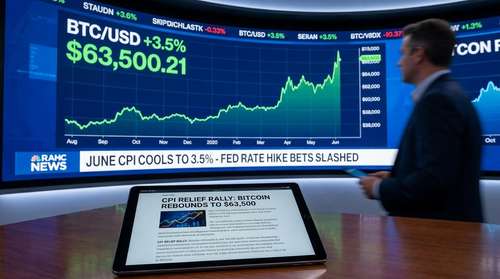

The cryptocurrency market just experienced one of its most violent trading windows of the year. Over the last 48 hours, digital assets swung wildly as Bitcoin reached a local peak of $78,384 before suffering a sharp rejection back toward the $75,000 level. This volatility, driven by conflicting reports surrounding the Middle East, forced one of the most massive crypto market liquidations we have seen in recent months. With macroeconomic crosswinds intensifying and legislative deadlines looming, analysts are rapidly adjusting their Bitcoin price prediction 2026 models.
The catalyst for the whipsaw price action was strictly geopolitical. Initial reports suggested a rapid de-escalation in the vital shipping lanes of the Middle East, prompting a sudden surge in risk assets across the board. However, rapid reversals in the maritime narrative caught leveraged traders off guard, highlighting exactly why the current environment remains so treacherous.
Strait of Hormuz Crypto Impact: A $593 Million Squeeze
The immediate driver of this week's price action centers squarely on the Strait of Hormuz crypto impact. On April 17, Iranian officials declared the critical waterway "completely open" for commercial ships during a newly established 10-day ceasefire between Israel and Lebanon. The announcement immediately sent global oil prices plunging below $86 a barrel, alleviating fears of sustained energy inflation and giving the Federal Reserve potential breathing room to consider rate cuts.
Bitcoin reacted instantly, piercing through heavy technical barriers to test the formidable Bitcoin resistance 78000 level. Derivatives traders who had crowded into bearish positions during the weeks-long blockade were caught completely offside, having been forced to pay negative funding rates just to keep their trades open. Data from CoinGlass reveals that the sudden price spike triggered over $762 million in total market liquidations. Of that massive wipeout, $593 million came strictly from short positions. Bitcoin alone accounted for $381 million of those liquidations, with Ether shorts making up another $167 million, marking a historic short squeeze for the first half of 2026.
The bullish momentum, however, was quickly exhausted. Less than 24 hours later, fresh reports indicated that commercial vessels were again receiving warnings from the Islamic Revolutionary Guard Corps (IRGC), forcing several oil tankers to turn back. U.S. President Donald Trump also clarified that the American naval blockade of Iranian ports would remain strictly in place until a permanent peace agreement is finalized. The resulting uncertainty dragged Bitcoin back into the mid-$75,000 range, punishing late long entries and capping off a brutal 48 hours for margin traders.
Institutional Crypto Trading and Bitcoin Safe Haven Status
While retail derivatives traders faced a bloodbath, the spot market tells a distinctly different story of accumulation. Institutional crypto trading desks appear to be calmly absorbing the geopolitical shocks. Over the past two weeks, MicroStrategy acquired another $2.6 billion in Bitcoin to bolster its treasury, while legacy financial heavyweights like BlackRock and Charles Schwab continued expanding their digital asset footprints.
This ongoing dynamic reignites the industry debate regarding the Bitcoin safe haven status. Historically pitched as digital gold, Bitcoin has largely functioned as a high-beta technology asset throughout the recent oil price spikes. When the strait effectively closed in late February, driving crude over $100, Bitcoin stagnated alongside equities. When the passage briefly reopened this week, Bitcoin surged. Institutions recognize this tight inverse correlation with energy costs; they are strategically buying the dips caused by geopolitical panic, betting that any sustained stabilization in energy markets will immediately unlock upside for digital assets.
The Deflationary Argument for Crypto
If oil prices can sustain a drop back to the $85 range, core CPI readings will likely soften heading into the critical summer months. Wall Street is watching this metric closely. Any hint of a dovish pivot from the Federal Reserve will act as rocket fuel for institutional digital asset portfolios.
CLARITY Act News: Regulatory Certainty Approaching?
Beyond the turmoil in the Middle East, a domestic catalyst is quietly keeping a solid floor under the market. The latest CLARITY Act news suggests that the United States is finally on the verge of establishing a comprehensive market structure for digital assets. The Digital Asset Market Clarity Act of 2025, which comfortably passed the House last July in a 294-134 bipartisan vote, has been stalled in the Senate Banking Committee over a bitter dispute regarding stablecoin yields.
Traditional banks lobbied fiercely against allowing passive yield on stablecoins, fearing a massive outflow of deposits. However, recent predictions from industry leaders, including Coinbase Chief Policy Officer Faryar Shirzad, suggest a breakthrough is imminent. Lawmakers are reportedly nearing a compromise that bans pure passive yield while permitting limited, activity-based rewards tied to platform usage. Capitol Hill insiders project the bill could finally see a Senate markup this month, followed by a full floor vote in May 2026. Passing this legislation would formally divide regulatory jurisdictions between the SEC and the CFTC, giving institutions the exact legal predictability they require to scale operations.
Recalibrating the Bitcoin Price Prediction 2026
Where does the digital asset market go from here? The hard rejection near $78,384 confirms that breaking out of the current multi-month consolidation range requires more than just a temporary geopolitical headline. The market needs sustained, organic spot buying volume to confidently clear the Bitcoin resistance 78000 block.
If the Strait of Hormuz situation genuinely normalizes and the CLARITY Act secures its highly anticipated Senate vote next month, the macroeconomic stars could align perfectly for a definitive breakout. Until then, traders should expect continued chop in the $73,000 to $77,000 zone. Leverage remains exceptionally dangerous in an environment dictated by rapid, unpredictable news cycles, but for long-term spot holders, the underlying institutional and regulatory foundations have rarely looked stronger.