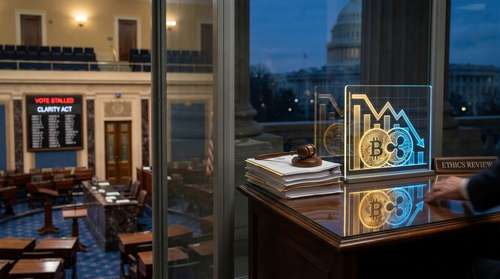

Bitcoin (BTC) staged a ferocious comeback on Wednesday, March 4, 2026, surging to an intraday high of $71,890 and reclaiming the psychological $72,000 threshold. The flagship cryptocurrency has successfully rebounded from a sharp correction triggered by escalating geopolitical tensions between the U.S. and Iran. This massive recovery is being propelled by a perfect storm of institutional adoption and macro-financial shifts: Jiuzi Holdings’ landmark $1 billion Bitcoin acquisition and growing anticipation for the U.S. Clarity Act’s regulatory implementation. As investors reprice digital assets amidst fears of wartime inflation, the total crypto market capitalization is pushing rapidly toward a staggering $3.8 trillion.
Jiuzi Holdings Triggers Institutional FOMO with 10,000 BTC Deal
The primary catalyst for today’s green candles is the confirmed report that Nasdaq-listed Jiuzi Holdings (JZXN) has finalized a definitive agreement to acquire 10,000 BTC. In a deal valued at approximately $1 billion, the company will issue equity to a strategic global digital asset investor in exchange for the massive Bitcoin tranche. This acquisition is not just a treasury allocation; it represents one of the largest corporate endorsements of Bitcoin since the 2024 ETF approvals.
Market analysts view this move as a signal that the corporate "land grab" for scarce digital assets is accelerating. "Jiuzi Holdings’ entry with such a massive volume—10,000 BTC—removes significant supply from the liquid market," noted a senior analyst at a leading crypto hedge fund. "When you combine this supply shock with the current ETF inflows, the supply crunch becomes undeniable." The deal has effectively set a new floor for the Bitcoin price, forcing short-sellers to capitulate and fueling a squeeze back above $71,000.
US-Iran Conflict: From Panic Sell-Off to "War Inflation" Hedge
Earlier in the week, the US Iran conflict crypto impact was decisively negative, with markets reacting instinctively to fears of global instability. Bitcoin briefly dipped as traders fled to cash. However, the narrative has shifted dramatically in the last 48 hours. Investors are now pivoting to a "hard asset" thesis, anticipating that prolonged military engagement will force the Federal Reserve to expand the monetary supply—effectively printing money to fund the conflict.
Arthur Hayes and the Money Printer Thesis
This reversal aligns with the long-standing predictions of BitMEX co-founder Arthur Hayes, who has argued that every major U.S. military conflict since the Gulf War has been funded by monetary expansion. In a recent note, Hayes reiterated that "the longer the U.S. lingers in Iran, the higher the likelihood of the Fed printing money to support the war machine." Consequently, smart money is front-running this potential liquidity injection, treating Bitcoin not as a risk asset, but as a hedge against the inevitable debasement of the dollar. This shift has been crucial in driving the crypto market recovery news we are seeing today.
The Clarity Act: Regulatory Certainty Fuels the Fire
Adding fuel to the fire is the growing optimism surrounding the Clarity Act crypto regulation. With the bill making significant progress through the Senate, the industry is on the verge of finally receiving clear definitions distinguishing "digital commodities" (regulated by the CFTC) from securities. This legislative framework is expected to end the years-long jurisdictional war between the SEC and CFTC, unlocking a new wave of institutional capital that has been sidelined by regulatory ambiguity.
"The Clarity Act is the missing piece of the puzzle for trillion-dollar asset managers," explains regulatory expert Sarah Jenkins. "Once this passes, we aren't just looking at a $3.8 trillion market cap; we could be looking at a roadmap to $10 trillion by the end of the decade." The anticipation of this bill passing in 2026 is acting as a powerful tailwind, giving institutions the confidence to execute large-scale buy orders like the one seen from Jiuzi Holdings.
Bitcoin Price Prediction: Is $100,000 Next?
With Bitcoin stabilizing above $71,000, attention has turned to the Bitcoin price prediction March 2026. Technical indicators suggest that the correction is over, and the path of least resistance is up. Macroeconomist Henrik Zeberg has forecasted a potential rally to $110,000–$120,000 in the coming weeks, driven by the "Risk-On Fever" and continued ETF inflows. Meanwhile, Standard Chartered maintains a bullish year-end target of $150,000, citing the perfect alignment of political, fiscal, and regulatory drivers.
As the 10000 BTC acquisition deal settles and the geopolitical landscape evolves, the market is signaling that the dip was a buying opportunity. If the $72,000 level holds as support, the psychological barrier of $100,000 may be the next major battlefield for bulls in this historic cycle.